In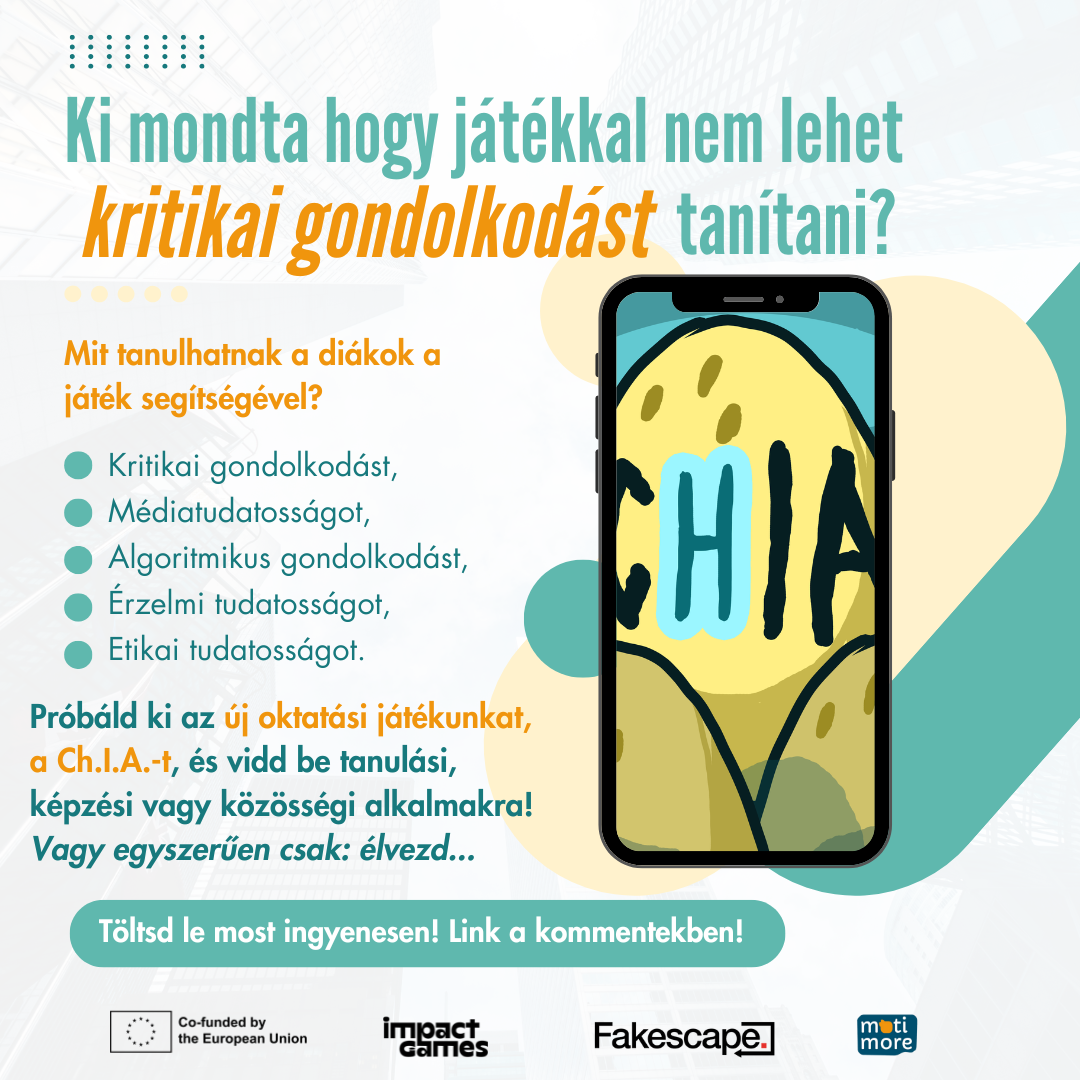 today’s digital world, young people are flooded every day with news, opinions, and videos. The ability to critically evaluate sources, recognize bias, and identify manipulation techniques has become a fundamental competence that everyone must acquire. But do young people really know how to distinguish fact from manipulation?
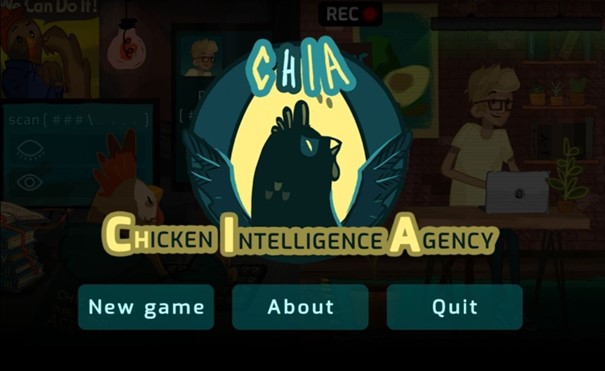
This challenge is addressed by the Chicken Intelligence Agency (Ch.I.A.), an educational digital game developed within the framework of our latest Erasmus+ project through international cooperation (available in English, Hungarian, Slovak, and Czech). The aim of the project was to develop an innovative learning tool that supports the development of critical thinking, media literacy, and algorithmic awareness in a playful yet thought-provoking way.
🐔 Learning through experience
The Chicken Intelligence Agency is not a traditional educational program. During the game, participants encounter  situations that reflect how the real media environment operates. The decision-making scenarios encourage players to think through how information influences perception, emotions, and decision-making, and what consequences the sharing or suppression of certain content may have.
From a methodological perspective, Ch.I.A. is a media literacy–focused game that also plays an important role in developing algorithmic literacy and algorithmic awareness. It helps players understand that the content appearing on digital platforms is shaped by filters, logics, and automated decisions that significantly influence what we see and how we interpret the world.
🐔 What can students learn from this?
Ch.I.A. is not just a game, but a learning tool that develops the following key competences:
-
Critical thinking: Recognizing logical fallacies, cognitive biases, and persuasive techniques in the media.
-
Media literacy: Understanding how digital platforms exploit biases, shape information flows, and influence beliefs.
-
Ethical awareness: Reflecting on dilemmas such as censorship, echo chambers, and the responsibility of content filtering.
-
Perspective-taking: Developing an empathetic approach to different viewpoints and understanding why people believe what they believe.
-
Algorithmic thinking: Experimenting with a visual filtering system that helps learners understand how algorithms process media content.
-
Emotional awareness: Recognizing how stress, fear, or information overload increase vulnerability to manipulation, and learning strategies for balanced judgment.
And many more…
🐔 Teacher support materials and lesson plans – all in the spirit of constructivism
From a constructivist pedagogical perspective, the game demonstrates that knowledge, beliefs, and even media narratives are not fixed truths but socially constructed phenomena. It encourages learners to critically examine how these are created and how they evolve.
An accompanying guide has also been developed, containing 10 detailed lesson plans designed for different educational settings, from formal school lessons to non-formal youth education. The guide also includes additional useful materials:
-
A user guide for the application with a focus on pedagogical aspects,
-
Lesson plans and discussion questions to support post-game reflection,
-
Practical tips for integrating the game into educational contexts,
-
Key learning objectives aligned with the game and media literacy topics,
-
A glossary of terms used in the game,
-
A brief introduction to the world of media literacy.
This guide is intended to support teachers, youth workers, and facilitators in integrating the Chicken Intelligence Agency into their educational and training activities. Download it now along with the related research!
The game is completely free to download on the following platforms:
Don’t miss out on news, testing opportunities, and early access!
Follow us on Motimore.com on social media, or on our partners’ platforms, and try the game with your students!🐔
Project Identifier Number: 2023-1-SK02-KA220-YOU-000160710